
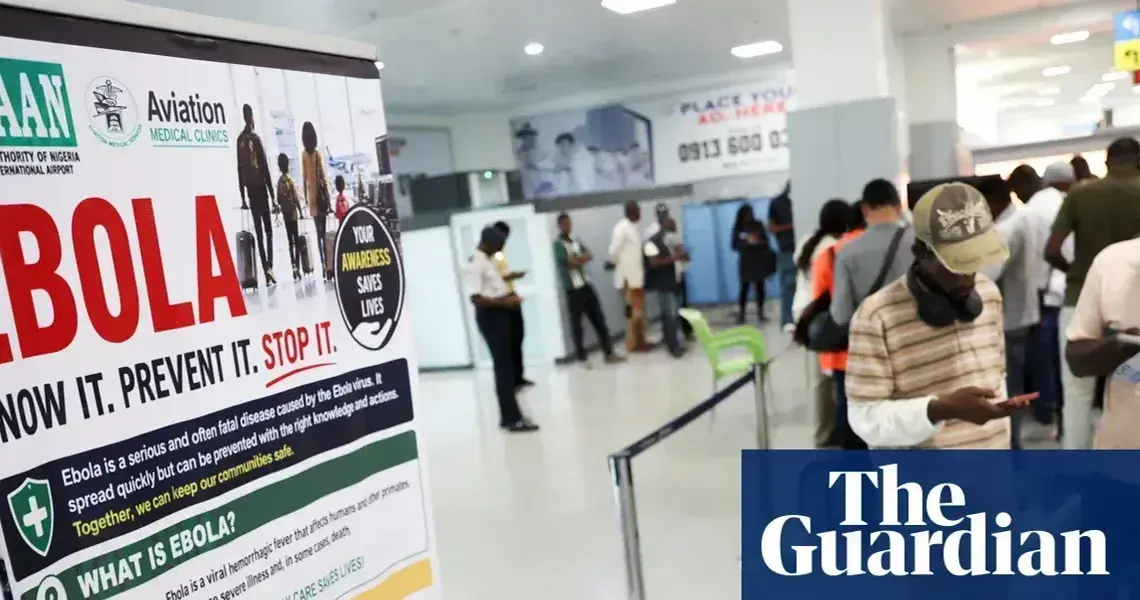
Health officials across Africa are scrambling to identify the origin of Nigeria’s first Ebola case in over a decade, as contradictory reports regarding the patient’s travels fuel fears that the virus is spreading faster than can be tracked. The patient, a Ugandan-born wife of a Swiss diplomat stationed in Abuja, has become the center of an epidemiological puzzle. While earlier accounts suggested she had visited the Democratic Republic of Congo where the current outbreak began, the Swiss foreign ministry now asserts she never entered the DRC and instead likely contracted the illness during travel in Uganda.
This discrepancy has created significant tension between regional health authorities. The Ugandan government maintains its own territory is currently free of the virus and insists it would have publicized any known cases. Meanwhile, investigators from the Africa Centres for Disease Control and Prevention are exploring a different lead, questioning if the woman encountered another infected person at Uganda’s Entebbe airport on October 3rd. However, some experts warn against this theory, arguing that simply being present in a large airport does not constitute a strong enough link to explain how such a deadly virus jumps between individuals.
The uncertainty comes at a critical time as this particular outbreak represents one of the most geographically widespread events in history. Caused by the rare Bundibugyo virus, which lacks an approved vaccine or specific treatment, the epidemic has already claimed nearly half of its 9,500 victims in the DRC. Because Ebola spreads rapidly through bodily fluids and leads to catastrophic organ failure and internal bleeding, any gap in communication between nations increases the risk of undetected community transmission.
Nigerian Health Minister Muhammad Ali Pate stated that while contact tracing is ongoing and the situation remains contained for now, urgency is paramount to keep the virus from entering general populations. International observers emphasize that transparency and immediate data sharing across borders are moving from being helpful suggestions to absolute necessities if they hope to stop this outbreak from mirroring the devastating scale of the West African crisis seen years ago.